
Choosing a Cosmetic Dentist in Parrish, FL
Choosing a cosmetic dentist in Parrish, FL is less about a single procedure and more about finding a plan that fits your smile, your timeline, and your other dental needs. Destination Dental, the office of…
A family dentist in Parrish, FL should be a place where adults and children can get routine care, and where you can ask questions before treatment is scheduled. Destination Dental is the office of Dr.…
If you are considering a dental implant in Parrish, FL, it helps to know the idea and the process before you book a visit. A dental implant is a small post placed in the jaw…
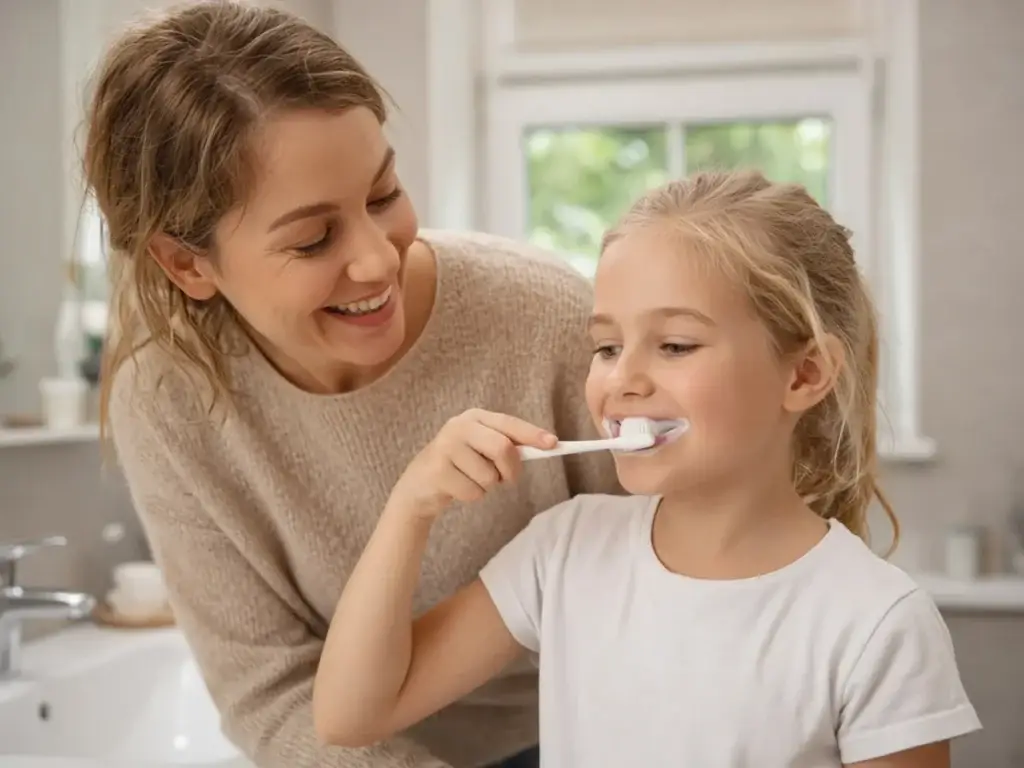
If you live in Parrish, FL, you may have questions about Florida’s fluoride ban and what it means for your family’s teeth. Manatee County had already stopped adding fluoride to the public water supply, and a statewide law took effect on July 1, 2025. This post explains what changed, how it can affect children and adults, and simple ways to protect teeth now. What the Fluoride Ban Changed in Parrish, FL Manatee County’s system for adding fluoride to the water had been out of service since 2021, so many households in Parrish, Ellenton, Palmetto, Lakewood Ranch, and nearby communities were already drinking water without added fluoride. On April 15, 2025, county commissioners voted 5-1 to formally end the program and cancel plans to repair the equipment. That decision is recorded as Ordinance 25-025. (WUSF, Bradenton Herald) A Florida law, Senate Bill 700, was signed on May 15, 2025, and took effect on July 1, 2025. The bill does not name fluoride, but it limits certain additives in public drinking water and ended community water fluoridation across the state. Florida became the second state to do so, after Utah. (NBC News) This does not mean tap water is completely free of fluoride. A small amount can occur naturally in groundwater. What has changed is that utilities are no longer adding fluoride to reach the level previously used to help prevent cavities. What This Means for Children’s Teeth Children’s teeth are still forming, and cavities are common when brushing is inconsistent or snacks and sweet drinks are frequent. Community water fluoridation has been one way children received a steady, low level of fluoride each day, even between brushings. According to the Centers for Disease Control and Prevention, drinking fluoridated water helps prevent about 25% of tooth decay in both children and adults, even in communities where most people already use fluoride toothpaste. The toothpaste and the water work in different ways and are meant to complement each other, not replace each other. The American Dental Association has also long supported community water fluoridation as an effective way to prevent decay. What This Means for Adults Adults can still get cavities. As gums recede with age, the roots of the teeth can be exposed, and those surfaces decay more easily. Dry mouth, from medications or other causes, also raises the risk. Without fluoride added to the water, the fluoride you get from toothpaste and from professional care matters more, not less. Simple Ways to Protect Your Teeth Now Brush twice a day with fluoride toothpaste This is the simplest daily step. The CDC recommends brushing twice a day with fluoride toothpaste. For children younger than 3, use a smear about the size of a grain of rice, after you check with a dentist. For children ages 3 to 6, use a pea-size amount. Teach children to spit the toothpaste out and not to swallow it. (CDC oral health tips for children) Adults should also use a fluoride toothpaste and take care along the gumline, where plaque collects and roots can be exposed. Ask about fluoride varnish at your visit A thin fluoride varnish can be painted on the teeth during an exam or cleaning. It is not a one-time treatment; it needs to be reapplied. The CDC notes that fluoride varnish can prevent about one-third of cavities in baby teeth when it is used as recommended. We can talk with you about whether varnish is a good fit for your child or for an adult with a higher risk of decay. You can learn more about preventive visits on our exams and checkups and preventive dentistry pages. Consider sealants for back teeth Dental sealants are a thin protective coating placed on the chewing surfaces of the back teeth, where grooves can trap food and bacteria. The CDC reports that sealants can prevent about 80% of cavities in those surfaces. They are not a substitute for brushing, and they are not placed over existing cavities. Sealants are often discussed for children and teens when the permanent molars have come in, and we can also talk with adults when a tooth is a good candidate. Our children’s dentistry page explains how these visits usually go. Keep regular cleanings and exams Professional cleanings remove buildup that brushing misses, and exams let us catch early weak spots before they become painful. For many families, seeing a family dentist in Parrish makes it easier to keep both kids and adults on a regular schedule. If a child is due for a first visit, our child’s first dental visit page walks through what to expect. Frequently Asked Questions Did Manatee County stop adding fluoride to the water? Yes. Manatee County’s fluoridation equipment had not been in use since 2021. On April 15, 2025, county commissioners voted 5-1 to formally end the program (Ordinance 25-025) and cancel plans to repair the system. When did Florida’s fluoride ban take effect? A statewide law (Senate Bill 700) was signed on May 15, 2025, and took effect on July 1, 2025. Florida became the second state, after Utah, to end community water fluoridation at the state level. Does this mean Parrish tap water has no fluoride at all? Not necessarily. A small amount of fluoride can occur naturally in groundwater. What has changed is that fluoride is no longer being added to reach the level previously used to help prevent cavities. How can I protect my child’s teeth now? Brush twice a day with fluoride toothpaste (a rice-size smear for children under 3 after checking with a dentist, and a pea-size amount for ages 3 to 6). Keep up regular exams and cleanings, ask about fluoride varnish, and ask whether sealants are a good fit for the back teeth. Do adults still need fluoride if it is not in the water? Yes. Adults can still get cavities, including on exposed root surfaces. Fluoride toothpaste, professional fluoride varnish when recommended, and regular cleanings remain useful throughout life. How to Get Started If you
Florida’s Fluoride Ban: What It Means for Your Family’s Teeth in Parrish Read More »
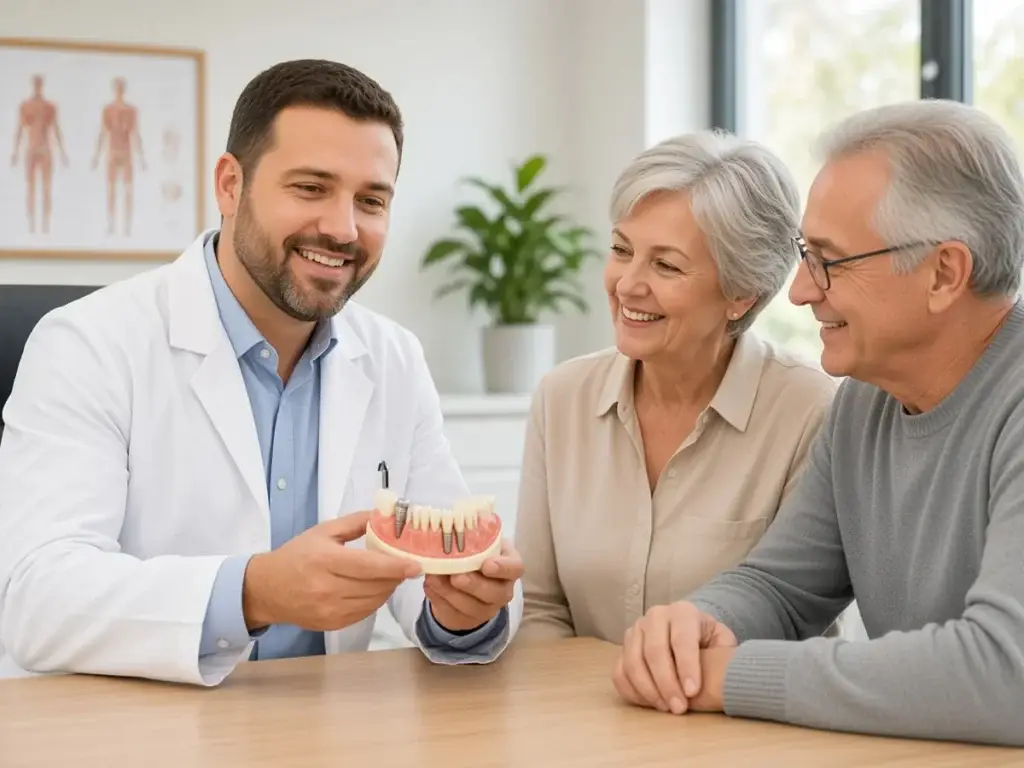
If you are missing several teeth, or you are thinking about a full set of replacements, you may be comparing dentures with implant-based options. That decision is personal. It depends on your bone, your general health, your budget, and how you want the teeth to feel when you chew and speak. At Destination Dental in Parrish, FL, Dr. Michael Kutsyk helps seniors and other adults from Manatee County understand those differences before anyone commits to a plan. It also helps to understand how each option works. We make and support removable dentures here. With an implant, a small post is placed in the jaw and allowed to heal, and then Dr. Kutsyk restores the tooth with an implant crown. How Removable Dentures Work A complete denture replaces an entire arch of teeth and rests on the gums. A partial denture fills one or more spaces and usually clasps to remaining teeth. Dentures can be a practical way to restore a smile and make eating easier, often on a shorter timeline than implant treatment, and they are commonly a more budget-friendly starting point. They do require an adjustment period. Speaking and chewing feel different at first, and the fit can change as the gums and jaw change over time. Good denture care includes daily cleaning, storing the denture as instructed so it does not dry out, and keeping regular visits so we can check the fit. A reline or adjustment may be needed later. If a denture rubs or feels loose, do not ignore it; a sore spot can get worse, and we would rather adjust the fit than have you set the denture aside. How Implants Change the Conversation A dental implant replaces a missing root with a post in the jaw. After the bone heals around it, a custom crown can be attached. Implants can also, in some cases, help support a denture so it stays more stable; our implant-supported dentures page explains that option. Those designs vary widely, and not every patient is a candidate. Bone volume, gum health, medical conditions, medications, and smoking history all matter. An implant usually involves several visits. Healing often takes weeks to months. That longer timeline is one of the trade-offs people weigh against the stability an implant can offer. Our dental implants in Parrish page walks through each step, and our guide to what affects the cost of dental implants explains what affects the total. If a tooth must be extracted first, or if a bone graft is recommended, that adds time as well. Implants are not automatically “better” for every senior. Some patients prefer to avoid surgery, or they do not have enough bone and do not want grafting. Others are eager for a more fixed feeling and are willing to go through the process. A careful exam is the only way to know which path is realistic. Thinking About How Your Smile Looks Replacing teeth is also about how you look when you smile. Whether you choose a denture, a bridge, or an implant crown, Dr. Kutsyk can match the shade and shape to your remaining teeth. If you would also like to brighten or reshape your front teeth, see our cosmetic dentistry, veneers, and smile makeover pages. Bridges and Other Middle Options If only one tooth, or a few teeth, are missing, a bridge may also be discussed. A bridge uses crowns on the neighboring teeth to support a replacement tooth and is fixed in the mouth. It does require preparing those supporting teeth, so it is often more appealing when those teeth already need crowns. Dr. Kutsyk will compare a bridge, a partial denture, and an implant when more than one option could work. Questions to Bring to Your Consultation A useful consultation is a conversation, not a sales presentation. You might ask: Are my remaining teeth strong enough to support a partial or a bridge? Do I have enough bone for an implant, or would a graft be required? How many visits, and how much healing time, would an implant path take? How will a denture feel for eating, speaking, and daily cleaning? What happens if my gums change after I get a denture? What steps and visits would each option involve? We do not list prices in this article because denture fees, surgical fees, and implant crown fees vary, and insurance coverage is different from plan to plan. After an exam, we can help you understand an estimate and whatever benefits may apply. We offer financing through Cherry; you can apply through Cherry or ask our office for help. We also have a membership plan for $170 a year that includes all x-rays and exams, including emergency exams, and 20% off all services. We accept HSA and FSA cards. You can also read our dental implants page and our payment options page for more on each step and how you can pay. Call (941) 842-2240 to verify details that matter to you, or book an appointment at our office on US Highway 301 in Parrish. Daily comfort should be part of the decision, not an afterthought. Some people adapt to a complete denture quickly; others need more time and a few adjustments. If eating favorite foods, speaking at church or with grandchildren, or keeping teeth in place during the day is a top concern, say so at the consultation. Those goals help Dr. Kutsyk recommend a denture, a partial, a bridge, or an implant with a custom crown, rather than steering everyone toward the same plan. It also helps to be realistic about maintenance. Dentures need cleaning and periodic fit checks. Implant crowns need the same careful daily cleaning as natural teeth, along with regular exams, because the gums around an implant can still become inflamed. Neither option is a “set it and forget it” tooth. Knowing that up front makes the choice less surprising later. Patients visit us from throughout Manatee County, including Ellenton, Palmetto, and Lakewood Ranch. If you have been living
Dentures vs. Implant Options for Seniors in Manatee County Read More »
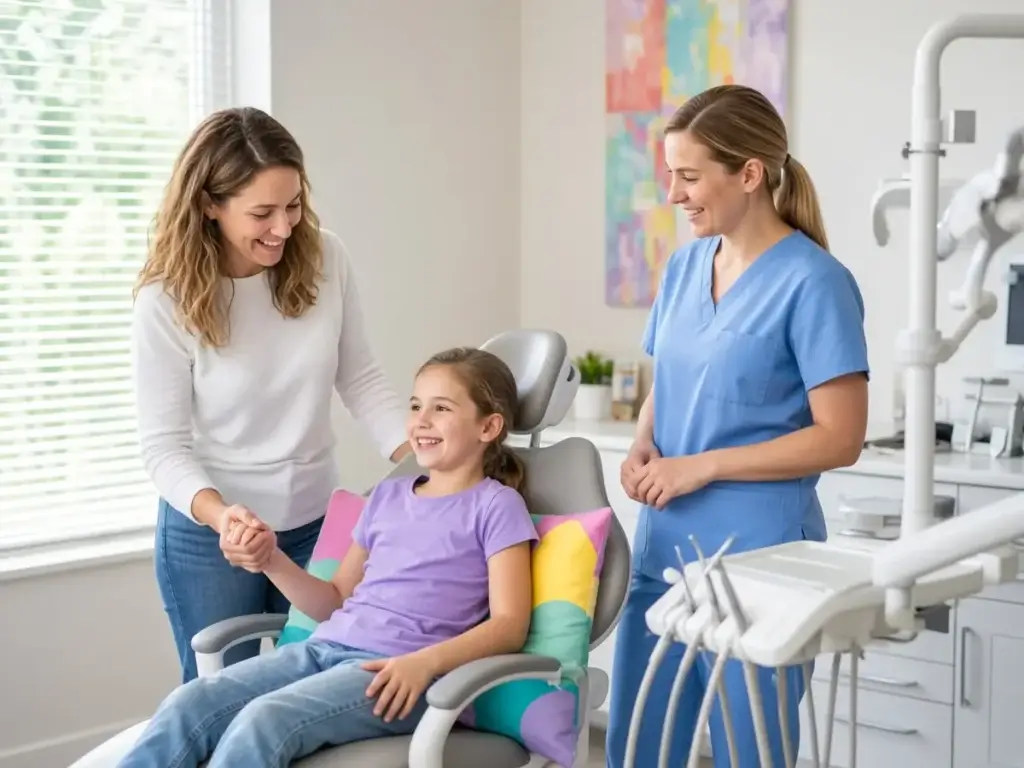
Parents in Parrish, Lakewood Ranch, Ellenton, and Palmetto often want a dental home that can see children as well as adults, without a long drive into a busier part of the county. Destination Dental, at 10014 US Highway 301 N in Parrish, is a family office led by Dr. Michael Kutsyk. We see kids of all ages, and walk-ins are welcome. We are accepting new patients, including children. This post explains what children’s dentistry looks like here, how visits usually go, and how to prepare a child who is nervous. It is meant as a practical overview of how visits usually go. We see kids of all ages. If you have a question about a child with special needs or a specific treatment, call (941) 842-2240 and we will tell you what we can comfortably provide. A Family Office, Close to Home Many families in the Lakewood Ranch and Parrish area like being able to schedule more than one person on the same trip. As a family dentist, we can often see parents and children in the same practice, which makes it easier to keep preventive visits on track. Our office sits on US Highway 301, so the drive from nearby neighborhoods is straightforward for many households. Regular exams and cleanings are the foundation of kids’ care. Those visits let us look for early cavities, watch how the adult teeth are coming in, and talk about brushing, flossing, snacks, and sports. If a child plays a contact sport, we can also discuss a sports mouth guard. What a Typical Visit Includes A child’s visit usually starts with a warm welcome and a chance to get comfortable in the chair. We explain instruments in simple language and move at a pace that helps the child feel safe. The hygienist or dentist will clean the teeth as appropriate for the child’s age, check the gums, and look for soft spots or new decay. X-rays are used when they are needed, not automatically at every visit, and we will explain why if images are recommended. Dental sealants may be discussed for the chewing surfaces of back teeth when those teeth are a good candidate. Sealants are a thin protective coating that can help keep food and bacteria out of deep grooves. They are not a substitute for brushing, and they are not placed over existing cavities. Fluoride may also be discussed as part of a prevention plan, depending on the child’s risk for decay. If a cavity is found, Dr. Kutsyk will explain the repair in terms a parent can follow, and he will talk with you about how to prepare your child. Some small cavities are treated with a tooth-colored filling. We will be clear if a tooth needs something different, or if a referral would serve your child better. First Visits and Nervous Kids A first dental visit is easier when it is not also an emergency. Our child’s first dental visit page walks through what to expect and how to prepare. If your child is overdue, or you are looking for a new office after a move to Manatee County, it is fine to start with a checkup while the teeth feel fine. Bring a list of medications, any past dental records you have, and questions about habits such as thumb sucking, pacifier use, or nighttime snacks. Many dental organizations suggest a first visit by the first birthday or within several months of the first tooth. We see kids of all ages, including toddlers, and you are welcome to start here at that age. Walk-ins are welcome. We want the visit to be a good experience, and we will work at a pace that helps your child feel comfortable. If your child is anxious, tell us in advance. Short, positive language helps. Avoid using the visit as a threat, and try not to share your own dental fears in detail right before you walk in. We will take breaks if your child needs them and celebrate small successes, such as sitting in the chair or letting us count the teeth. How to Get Started You can book an appointment online or call (941) 842-2240. Mention your child’s age and any concerns, such as a toothache, a bumped tooth, or anxiety, so we can plan the appointment. Our hours are Monday through Wednesday 8:30 a.m. to 5 p.m., Thursday 8:30 a.m. to 7 p.m., and Friday 8:30 a.m. to 12 p.m. Between visits, the habits at home do as much as the time in the chair. Children usually need help or supervision with brushing until they have the dexterity to do a thorough job, which often comes later than parents expect. Nighttime brushing is especially important, and frequent sipping of sweet drinks, including juice, can keep sugar against the teeth for hours. We would rather coach you on small changes than lecture you. If a child’s enamel is just beginning to show early weak spots, catching that at a checkup is much easier than waiting for a toothache. Sports, band instruments, and busy school calendars are part of life in this area, and they can also affect the mouth. A bumped tooth after a game should be checked, even if the tooth is not knocked out. If your child is due for a visit before camp, portraits, or the start of a sports season, call a little earlier than you think you need to so we can find a time that works. We do not list fees here because a preventive visit and a filling are different services, and insurance coverage varies. If you plan to use dental insurance, bring the card and we will help you verify benefits. New patients, including children of all ages, are welcome, and walk-ins are welcome. We look forward to helping your family feel at ease in Parrish, whether you are coming from down the road or from the Lakewood Ranch area.
Kids’ Dental Care in Parrish and Lakewood Ranch: What Parents Can Expect Read More »
Tooth pain rarely waits for a convenient weekday. If you are in Parrish, Ellenton, Palmetto, or Lakewood Ranch and a dental problem starts on Saturday or Sunday, it helps to know which symptoms can be managed until the office opens and which ones need emergency medical care right away. Destination Dental is open Monday through Wednesday from 8:30 a.m. to 5 p.m., Thursday from 8:30 a.m. to 7 p.m., and Friday from 8:30 a.m. to 12 p.m. We are closed Saturday and Sunday, but we have after-hours emergency services and an on-call doctor. If you need care after hours, call (941) 842-2240 to reach the on-call doctor. Walk-ins are welcome. Use the guidance below to decide whether you should also go to an emergency room. Symptoms That Should Not Wait for Monday Seek emergency medical care, or call emergency services, if you have: Swelling that makes it hard to breathe, swallow, or open your mouth Rapidly spreading swelling in the face, neck, or under the tongue Uncontrolled bleeding after an injury A serious blow to the face, a suspected jaw fracture, or a head injury Fever with facial swelling, or a feeling that you may faint Those signs can point to a medical emergency, not only a dental one. An emergency room can help you with airway issues, severe infection, or trauma. You can follow up with our emergency dentist team as soon as we are able to see you. Urgent Dental Problems That Still Need a Prompt Call Other problems are serious but can sometimes be managed carefully until a dentist can examine you, as long as you do not have the medical warning signs above: A toothache that keeps you from sleeping or eating A crown, filling, or piece of tooth that has come off A cracked or chipped tooth with sharp edges or pain A knocked-out permanent tooth (this is time-sensitive; see the first-aid notes below) Swelling that is present but not affecting breathing or swallowing For a knocked-out permanent tooth, handle it by the crown, the top part, not the root. If it is dirty, rinse it gently with water without scrubbing. If you can, place it back in the socket and hold it there, or keep it moist in milk or in the mouth next to the cheek. Then seek urgent dental or emergency care as quickly as you can. Baby teeth are usually not put back in; call for guidance rather than forcing a baby tooth into the socket. What You Can Do at Home Until You Are Seen For a typical weekend toothache without dangerous swelling: Rinse gently with warm water Avoid chewing on the sore side Use a cold compress on the outside of the cheek, with a cloth against the skin, if there is swelling Take an over-the-counter pain reliever only as directed on the label, and only if you can safely take that medicine Do not put aspirin or any crushed pill on the gums. That can burn the tissue. Do not use leftover antibiotics unless a dentist or physician has prescribed them for this problem. If a crown comes off, keep it in a clean container and bring it with you; do not try to glue it back with household adhesive. If you have an appointment already on the books, you can still call (941) 842-2240 if your symptoms have changed, including after hours to reach the on-call doctor. Tell us whether there is swelling, fever, or a broken tooth so we can plan the right amount of time. How to Reach Our Emergency Dentist in Parrish, Including After Hours Call (941) 842-2240 and describe what happened and what you have already done. After hours and on weekends, that same number reaches our on-call doctor. If Friday morning still has time on the schedule, that can be a better option than waiting until Monday, because we close at noon on Fridays. You can also book an appointment online, but a phone call is often faster when you are in pain. Walk-ins are welcome. Our office is at 10014 US Highway 301 N in Parrish, on US Highway 301, and we see patients from throughout the surrounding communities. Dr. Michael Kutsyk will examine the tooth, explain the cause, and recommend the next step, whether that is a filling, another restoration, or a referral if a specialist is needed. A weekend emergency is also easier to sort out if you already have a dental home. If you are a current patient, mention that when you call, along with any recent treatment, such as a new filling, crown, or extraction. If you are new to the office and you are in pain, you are still welcome to call. Tell us what happened, when it started, and whether you have swelling, so we can decide how to help you most quickly. It can be tempting to wait and see if the pain fades. Sometimes an ache does quiet down even though the cause is still there, especially if a nerve is irritated or dying. Do not take a quieter morning as proof that the tooth has healed. Call when we reopen and have the tooth examined. If the pain returns at night, or if swelling appears, treat that as a reason to move faster, including emergency medical care when breathing or swallowing is affected. We cannot promise a same-day visit in every situation, especially on a busy Monday, but we will make every reasonable effort to help you promptly when an emergency or severe toothache is involved. If you are ever unsure whether your symptoms can wait, err on the side of medical emergency care for breathing or swallowing problems, and call us as soon as we are open for the dental follow-up.
Signs You Need an Emergency Dentist on a Weekend Near Parrish, FL Read More »

When a tooth has a cavity or an old filling that is wearing out, patients often ask a simple question: do I need a filling, or do I need a crown? The answer depends on how much healthy tooth is left, not on a one-size rule. At Destination Dental in Parrish, FL, Dr. Michael Kutsyk recommends the most conservative restoration that can still protect the tooth for the long term. This article explains how fillings and crowns differ, when each is typically used, and what to expect at your visit. It is general information, not a diagnosis. Only an exam can tell you what your tooth needs. What a Filling Is Meant to Do A filling restores a tooth after a modest amount of decay or an old restoration is removed. Tooth-colored composite is placed directly in the prepared area, shaped to your bite, and polished, usually in a single visit. When the remaining walls of the tooth are strong, a filling can be a durable, conservative repair. Fillings have limits. If the cavity is very large, or if an old silver filling already takes up much of the chewing surface, a new filling may leave the tooth walls too thin. Those thin walls can crack later under normal chewing. In that situation, a larger, custom restoration may protect the tooth better than packing more filling material into a weak shell. After a filling, some sensitivity to cold is possible for a short time. That usually settles. If pain lingers, or if you cannot bite comfortably, call the office so we can check the bite and the tooth. What a Crown Is Meant to Do A crown is a cap that covers the entire visible portion of the tooth above the gumline. It is used when the tooth needs full coverage to keep it from breaking, or when there is not enough sound structure left for a filling to hold onto. Crowns are also used to restore a tooth that already has a significant crack, to cover a tooth that will support a bridge, or to restore an implant after the post has healed, which we discuss separately as an implant crown. Placing a crown usually takes more than one visit. The tooth is prepared, an impression or digital scan is taken, and a temporary crown is often worn while the final crown is made. At the second appointment, Dr. Kutsyk checks the fit, the color, and your bite, then cements the crown. You will still need to clean carefully around the edges, because a crowned tooth can still get decay at the margin if plaque collects there. How Dr. Kutsyk Chooses Between Crowns and Fillings in Parrish The decision is based on what he sees in the mouth and on X-rays: How much decay or old filling material has to be removed Whether the cusps, the raised points of the tooth, are intact Whether there is a crack, or a history of the tooth breaking How the tooth fits into your bite, including any grinding or clenching Whether a middle option, such as an onlay, could cover the weak area without a full cap An onlay can be a useful in-between restoration when part of the chewing surface needs coverage but the rest of the tooth is still strong. It is more conservative than a full crown and more protective than a very large filling. If that is a reasonable choice in your case, Dr. Kutsyk will explain it rather than jumping automatically to the largest option. There are times when a crown is clearly the safer path. A tooth that has already split a cusp, or that would be left as a thin rim after decay is removed, is often better protected with a cap than with another large filling. The goal is to avoid a fracture that could make the tooth much harder to save later. What This Means for Your Visit If you have a toothache, a broken filling, or a tooth that feels weak when you chew, call (941) 842-2240 or book an appointment. During the exam, Dr. Kutsyk will show you why he is recommending a filling, an onlay, or a crown. You should leave with a clear reason, not just a procedure name. We do not list fees here because a small filling and a crown are different treatments, and insurance coverage varies by plan and by the reason for the restoration. After the exam, we can help you understand an estimate and any benefits that may apply. Our office is at 10014 US Highway 301 N in Parrish. We welcome patients from Ellenton, Palmetto, Lakewood Ranch, and other nearby communities in Manatee County. If you are already in pain, tell us when you call so we can plan an appropriate time to see you. It also helps to know what will not be decided from a photo you send or from a description over the phone. A tooth can look “fine” in the mirror and still have a crack or a failing filling underneath. Likewise, a stained groove is not always decay. That is why Dr. Kutsyk would rather examine the tooth, and use an X-ray when it would add useful information, than guess at a crown or a filling from a conversation alone. Home care still matters after either treatment. Brush gently along the gumline, clean between the teeth, and mention any grinding so we can talk about protecting the new work. If a bite feels high after a filling or a crown is placed, call us. A small adjustment is often all that is needed, and it is better to fix that early than to live with a sore tooth. If you have questions about a tooth that already has a large filling, or you have been told you may need a crown, a second, careful look can help you decide with more confidence. Dr. Kutsyk and the Destination Dental team are here to explain the options in plain
Dental Crowns vs. Fillings: Which Does Your Tooth Need in Parrish, FL? Read More »
Many people grew up hearing that you should have a dental cleaning every six months. For a large number of healthy patients, that interval is still a sensible starting point. It is not a rule that fits everyone. At Destination Dental in Parrish, FL, Dr. Michael Kutsyk recommends a cleaning schedule based on your gums, your medical history, and how quickly plaque and tartar collect in your mouth. A professional cleaning removes hardened tartar that brushing and flossing cannot, and it is usually paired with an exam to look for cavities, gum changes, and other issues. Coming on a regular rhythm is one of the simplest forms of preventive dentistry, but the rhythm should be personal. Why Six Months Is a Common Starting Point Six months is a familiar interval because it is often enough to catch early problems and to clean areas that have been missed, without asking every healthy patient to come in constantly. If your gums do not bleed, your periodontal measurements stay in a healthy range, and you do not build tartar quickly, that schedule may be appropriate for a long time. It is still a starting point, not a lifetime contract. If something changes, such as pregnancy, a new medication that dries the mouth, a diagnosis of gum disease, or a stretch of missed home care, we may shorten the interval for a while. When a Shorter Interval Makes Sense You may be asked to come every three or four months, or on another personalized timetable, if you have: Periodontitis or a history of a deep cleaning Gums that bleed easily or pockets that need closer watching A medical condition or medication that affects saliva, healing, or infection risk A heavy buildup of tartar even when you brush well A high risk of cavities These more frequent visits are often periodontal maintenance, not the same as a routine cleaning on a healthy mouth. The purpose is to keep bacteria from settling back into previously affected areas. Skipping those visits can allow inflammation to return even if you feel fine. What About Waiting a Year, or Coming Only When Something Hurts? Waiting until a tooth hurts often means a problem has already become more involved, and sometimes more expensive, than it would have been at a routine visit. A yearly schedule may be enough for a few people with very healthy gums and little tartar, but that should be a decision made after exams, not a default because it is convenient. If you have been away from the dentist for several years, start with a comprehensive exam and cleaning; we can then recommend a realistic interval going forward. Children usually benefit from regular visits as well, both to clean the teeth and to watch growth, eruption, and cavity risk. The interval for a child is individualized, just as it is for adults. Making Visits Easier If You Live Nearby Our office is at 10014 US Highway 301 N in Parrish. If you live in Ellenton, Palmetto, Lakewood Ranch, or Bradenton, a predictable cleaning schedule is easier to keep when the drive is straightforward and the hours include a Thursday evening and Friday morning. We are open Monday through Wednesday 8:30 a.m. to 5:00 p.m., Thursday 8:30 a.m. to 7:00 p.m., and Friday 8:30 a.m. to 12:00 p.m., and closed on weekends. If you are anxious about visits, tell us. We will explain each step and work at a pace you can handle. We do not offer sedation in this office, but a calm, predictable routine still helps many people stay on schedule. What a Typical Cleaning Visit Includes A routine visit often includes a review of any changes in your health or medications, a cleaning to remove plaque and tartar, and time to look at the teeth, gums, and, when indicated, X-rays. The exam portion is as important as the cleaning itself. You may also hear gum measurements from time to time so we can compare them with previous charts. If it has been several years since your last visit, the first appointment may take more time. That is normal. We would rather do a thorough assessment than rush through tartar that has had a long time to collect. If your gums are tender, we can pause, numb an area if needed, or divide the work when that is kinder. Between visits, a soft brush, daily cleaning between the teeth, and a careful look at sugary snacks will make each professional cleaning easier. If you are not sure you are flossing effectively, ask us to demonstrate. A small change in technique is often more useful than buying a new gadget. If you are overdue and feel embarrassed, you are not alone, and you will not be scolded. Starting again is the useful step. Once we have a current picture of your gums and teeth, keeping a regular rhythm is usually much easier than catching up after a long gap. How to Set Your Next Cleaning The most useful answer to “How often should I get a cleaning?” is the one that follows your last exam. If you are due, or you cannot remember when you were last seen, call (941) 842-2240 or book an appointment. We will look at your history and recommend an interval, rather than selling a shorter schedule you do not need. When you are ready, Book an appointment online. Regular cleanings are one of the most conservative ways to protect your teeth, as long as the timing fits you.
How Often Should I Get a Dental Cleaning in Parrish, FL? Read More »
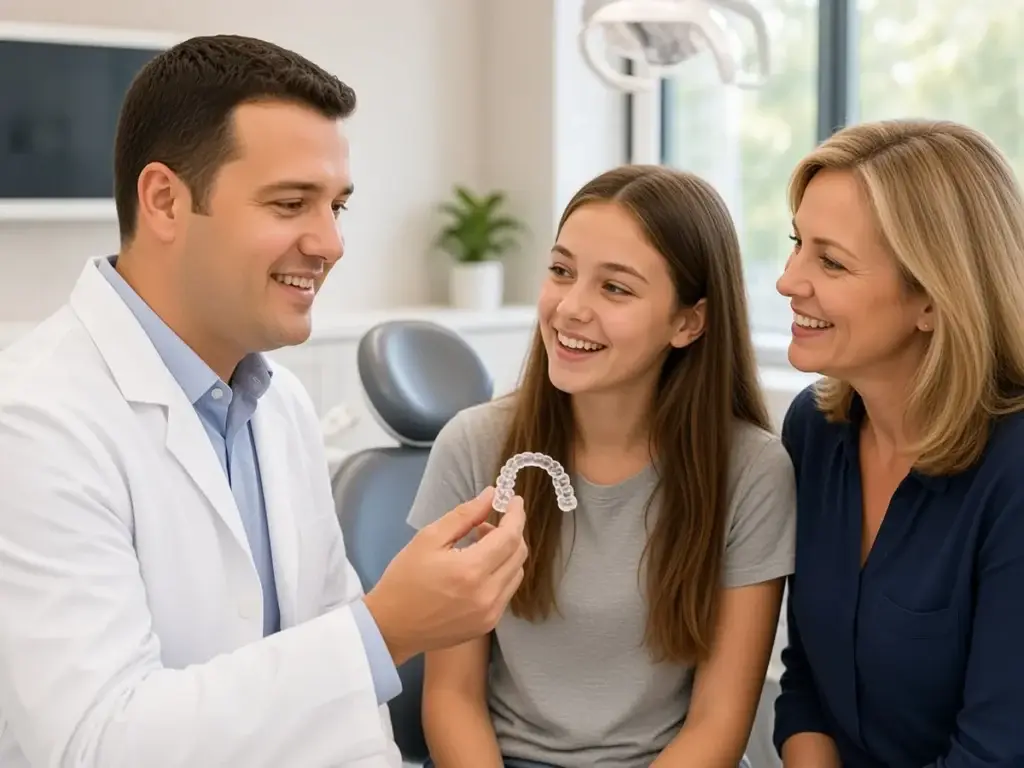
Parents in Manatee County often ask whether Invisalign or traditional braces are the better choice for a teen, or for an adult who is ready to straighten their teeth. The fair answer is that both can work well, and the better option depends on the bite, the person’s habits, and the kind of movement the teeth need. At Destination Dental in Parrish, FL, Dr. Michael Kutsyk offers Invisalign. He does not place traditional braces in this office. If braces are the more appropriate tool, he will tell you that and can help with a referral. That honesty matters. A comparison is only useful if you know what this practice provides and what it refers out. The goal is a healthy, stable bite, not a particular brand name. How the Two Approaches Differ Traditional braces use brackets and wires that stay on the teeth and are adjusted over time. They can handle a wide range of tooth movements, including some complex bite problems, and they do not rely on the patient to put the appliance back in after meals. Invisalign uses a series of clear, removable aligners that are worn most of the day and night and changed on a schedule. They are less noticeable in photos and can be taken out for eating and brushing. They work well for many mild to moderate alignment issues, but they only work if they are worn as directed. A teen who will not keep trays in for the prescribed hours will not get the planned result, no matter how well the case was designed. Questions Families in Parrish, Ellenton, and Palmetto Should Ask During a consultation, it helps to talk about: What problem you want to correct, and how complex the bite is Whether the person will reliably wear removable aligners Sports, band, or other activities that make a removable tray easier or harder Hygiene, because both options need careful cleaning, and braces can make flossing more time-consuming Whether existing crowns, fillings, or missing teeth change the plan If Invisalign is a good fit, Dr. Kutsyk will explain the exam, the digital plan, and the follow-up visits. If the case needs braces or another type of orthodontic care we do not provide here, you will hear that clearly, before you invest time in a method that is unlikely to meet the goal. Teens, Adults, and What “Better” Means “Better” is not the same for every family. Some teens prefer a look that is less visible in school photos. Some do better with braces because the appliance stays in place. Adults often like the flexibility of aligners, especially at work, but they still need to wear them almost full time. Either approach can take many months; we will not quote a guaranteed finish date, because teeth and compliance vary. Retainers are part of the story after either treatment. Teeth can drift if retention is skipped. We will discuss retainers as part of an Invisalign plan, and a referred orthodontist would do the same after braces. Visiting From Lakewood Ranch or Elsewhere in the County Our office is at 10014 US Highway 301 N in Parrish. Families from Ellenton, Palmetto, Lakewood Ranch, and Bradenton are welcome. A consultation is the right first step even if you are still deciding, because a visual guess from a photo is not the same as an exam. Hours are Monday through Wednesday 8:30 a.m. to 5:00 p.m., Thursday 8:30 a.m. to 7:00 p.m., and Friday 8:30 a.m. to 12:00 p.m. Call (941) 842-2240 or book an appointment to set up a visit. We can also talk about how Invisalign may fit with other smile goals, such as whitening after the teeth have been aligned. What an Invisalign Consultation Usually Involves A consult typically includes looking at your teeth and bite, talking about your goals, and deciding whether records such as photos, a scan, or X-rays are needed to plan treatment. If you move forward, attachments — small tooth-colored bumps — are often bonded to certain teeth so the aligners can grip and move them more predictably. Some cases also need a little space created between teeth. Dr. Kutsyk will explain those steps before they are done. Follow-up visits are how we check that the trays still fit and that the teeth are tracking with the plan. If a tray is lost, or if a teen has been leaving aligners out, tell us rather than skipping ahead. Starting the next tray too soon can stall progress or irritate the teeth. Adults who already have crowns, bridges, or implants can still be candidates in many cases, but the plan has to account for those teeth. That is another reason a consultation in the office is more useful than a photo sent from home. Cost Without Guesswork Fees for Invisalign and for braces are not the same from office to office, and they depend on the complexity of the case. Some dental plans contribute to orthodontic treatment, especially for teens, but coverage varies. We will not post a price range here that might not apply to you. After an exam, we can provide a quote for Invisalign if it is recommended, or help you understand why a referral may be the wiser path. When you are ready, Book an appointment or call us. We will give you a straightforward comparison and a recommendation that fits your family, not a sales pitch for a single option.
Invisalign vs. Braces for Manatee County Families Read More »