
Dentist in Parrish, FL | Destination Dental

TMJ Jaw Pain in Parrish, FL: Symptoms and When to See a Dentist

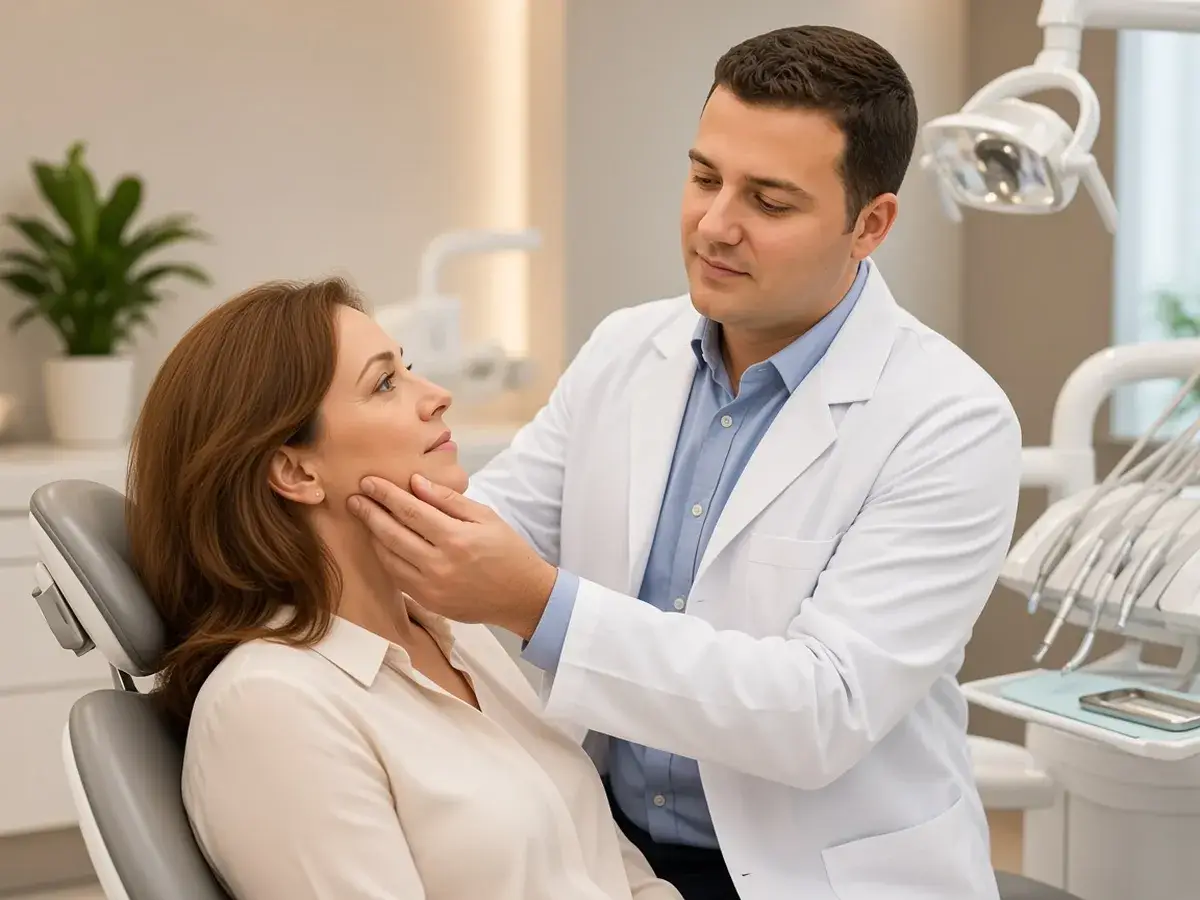
Dr. Michael Kutsyk checking a patient's jaw joint for TMJ pain in Parrish, FL

Jaw Pain Is Common, and Often Manageable

The temporomandibular joints, or TMJs, connect your lower jaw to your skull just in front of each ear. When the joints or the chewing muscles around them are irritated, you may notice pain, clicking, or stiffness. People often call this “TMJ,” though the problem is more accurately called a TMJ disorder.

At Destination Dental in Parrish, FL, Dr. Michael Kutsyk, DDS, evaluates jaw pain and offers conservative care such as custom night guards. Our TMJ treatment page explains that care. This page helps you recognize the symptoms and decide when to come in.

Common TMJ Symptoms

Symptoms vary from person to person. Common ones include aching in the jaw, face, or around the ear; clicking, popping, or grating when you open or chew; a jaw that feels tight or tired; and trouble opening your mouth wide.

Some people notice headaches near the temples, especially in the morning. Others feel like their bite is “off,” or that the jaw catches or locks for a moment. Ear fullness or pain without an ear infection can also be linked to the jaw joints.

What Can Trigger Jaw Pain

Clenching or grinding your teeth, often during sleep, is one of the most common contributors. Stress, chewing gum often, biting on pens or nails, and holding your jaw tight during the day can strain the muscles too.

A blow to the jaw, arthritis in the joint, or changes in your bite can also play a role. Sometimes there is no single clear cause, which is why a careful evaluation matters more than guessing.

When to See a Dentist

Make an appointment if jaw pain lasts more than a week or two, keeps coming back, makes it hard to chew, or comes with frequent headaches. Also come in if your jaw locks open or closed, if your bite suddenly feels different, or if you notice sensitive, chipped, or worn teeth that could point to grinding.

If your jaw is stuck and you cannot close your mouth, or you had a hard hit to the face, seek care right away. Call (941) 842-2240. After hours, the same number reaches our on-call doctor.

How Dr. Kutsyk Helps

Dr. Kutsyk will ask about your symptoms, gently check the joints and chewing muscles, look at how your teeth come together, and take X-rays if needed. He also checks for worn or cracked teeth from grinding.

Many people improve with simple, conservative steps, such as a custom night guard, softer foods for a while, avoiding gum, and stress and jaw-relaxing habits. If your symptoms point to a problem that needs more specialized care, Dr. Kutsyk will refer you. We accept most PPO plans and many Medicare Advantage plans, and we also offer Cherry financing, a $170 yearly membership plan, and HSA and FSA cards.

Simple Habits That May Ease Jaw Strain

While you wait for your visit, a few gentle habits can help some people feel better. Choose softer foods for a while and cut food into smaller pieces. Avoid gum, very chewy foods, and opening your mouth extra wide, such as with large sandwiches.

Notice whether you clench during the day, such as while driving or working at a computer. A relaxed jaw usually has the lips closed and the teeth slightly apart. Warm compresses on the jaw muscles may feel soothing. Try not to rest your chin on your hand or sleep on your stomach with pressure on your jaw.

These steps are not a substitute for an exam, especially if your pain is severe or keeps coming back. They can, however, give your jaw a break while Dr. Kutsyk looks for the cause and recommends care that fits your situation.

Related treatments: TMJ treatment, custom night guards, signs of teeth grinding, sensitive teeth, emergency dentist vs. ER, and request an appointment.

Frequently Asked Questions About TMJ Jaw Pain

Is clicking in my jaw a problem?

Clicking without pain is common and is not always a concern. If clicking comes with pain, locking, or trouble opening, it is worth having it checked.

Can TMJ pain go away on its own?

Sometimes mild jaw soreness improves with rest, softer foods, and avoiding gum. If pain lasts more than a week or two or keeps returning, schedule an exam.

Does a night guard help TMJ pain?

For many people who clench or grind at night, a custom night guard can reduce strain on the teeth and jaw. Dr. Kutsyk will tell you whether a guard makes sense for your symptoms.

Can TMJ problems cause headaches?

Jaw muscle tension can contribute to headaches, especially around the temples and in the morning. Let us know about headaches when you describe your jaw symptoms.

Should I see a dentist or a doctor for jaw pain?

A dentist is a good place to start, since teeth, bite, and grinding are common factors. If anything suggests another cause, Dr. Kutsyk will refer you to the right provider.

What should I do if my jaw locks?

If your jaw is stuck open or closed, call (941) 842-2240 right away. Avoid forcing it. If it followed an injury, go to the ER.

Get Your Jaw Pain Checked in Parrish

If your jaw clicks, aches, or feels tight, call (941) 842-2240 or book an appointment. Dr. Kutsyk will look for the cause and talk with you about relief.

Smiling patient relaxing in the dental chair at Destination Dental in Parrish, FL
Scroll to Top